I'll Drive: What sustains a relationship when the celebration is over?

For the woman who taught me that love is often carried in ordinary journeys.
"I will never drive for as long as you are around."
When my wife said those words, I didn't hear a debate about gender roles.
I heard many years of knowing my wife speaking.
She wasn't questioning her ability to drive. She was describing a rhythm our relationship had quietly grown into over the years. Somewhere between meeting in 1992 and building a family together, reaching for the car keys became one of the ways I carry us.
No meeting was called.
No agreement was signed.
Marriage simply wrote another sentence into our story.
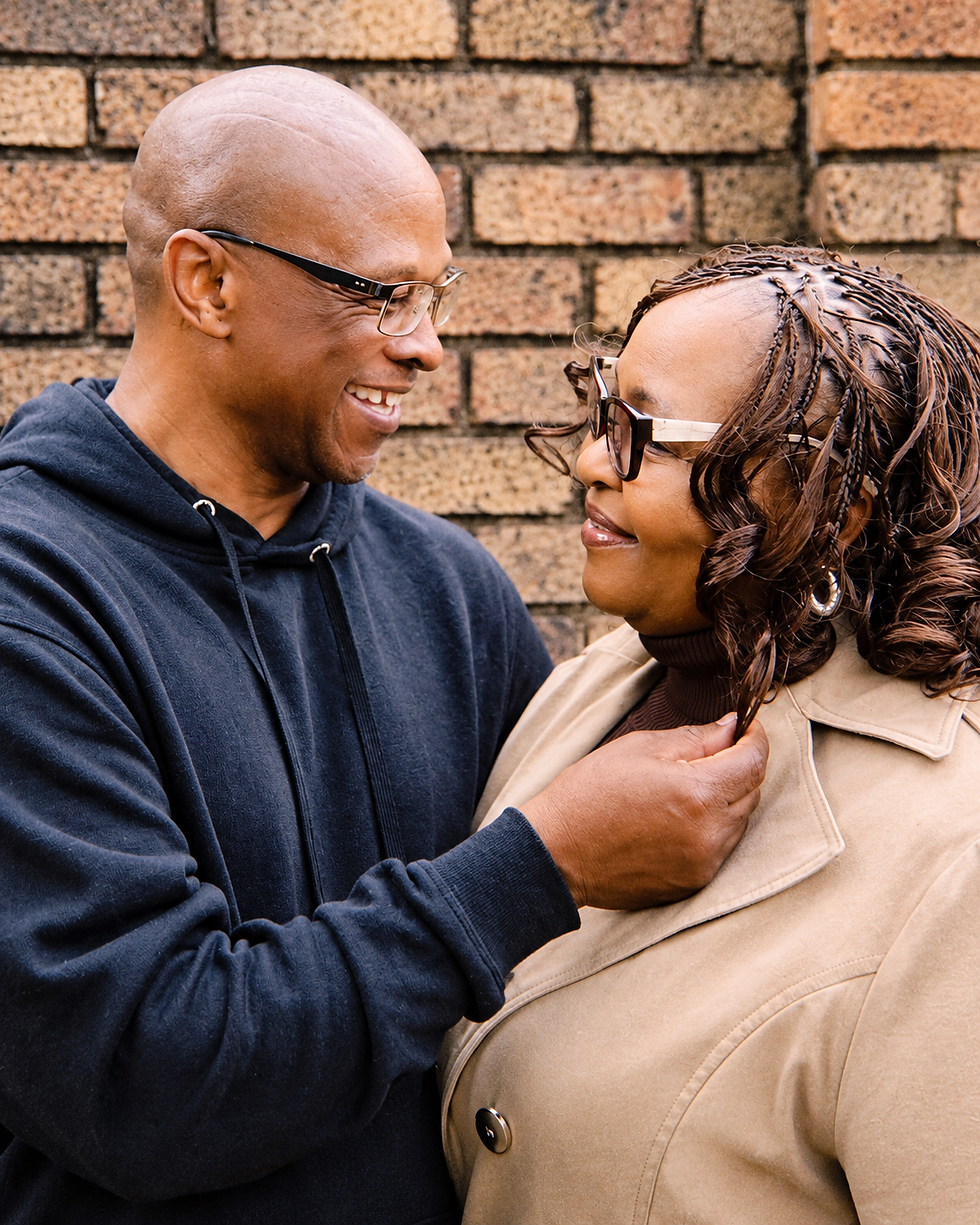
I recently came across an old family photograph. My wife sits beside me. Our children sit behind us. I'm behind the steering wheel. At first glance, it's just another family picture, the kind that quietly settles into a phone gallery without demanding attention.
But photographs have a strange way of becoming wiser than the moment that created them.
Years later, I realized that this picture wasn't preserving who was driving.
It was preserving how we had learned to journey together.
The Quiet Agreements Nobody Sees
People often remember weddings because of what everyone witnessed.
The vows.
The laughter.
The dancing.
The photographs.
Yet marriage itself is built by moments that almost nobody sees.
It is built on ordinary Tuesdays.
On grocery trips.
On waiting for one another after a long day.
On remembering how the other takes their coffee.
On reaching for the car keys without discussing who should.
When two people stay together long enough, they begin creating agreements they never consciously negotiate.
One always locks the doors before bed.
One notices when the other has become unusually quiet.
One remembers birthdays.
One reaches for the steering wheel.
These are not commandments.
They are quiet patterns.
And patterns repeated with love become part of a relationship's identity.
What the Photograph Cannot Show
Someone looking at our family picture might notice who is driving.
I notice something different.
I notice trust.
I notice familiarity.
I notice years that have quietly taught us how to move together.
The steering wheel is only the visible part of the story.
The invisible part is what matters.
The confidence that says, "We're together."
The comfort that doesn't need explaining.
The freedom that allows each person to become fully themselves without constantly renegotiating every responsibility.
Every lasting marriage develops its own rhythm.
Some couples share every task equally.
Some naturally settle into different roles.
The healthiest rhythm is not the one that looks traditional or modern from the outside.
It is the one both people continue choosing with love.
When a Role Becomes a Love Language
The same action can carry completely different meanings.
Driving because someone is forced to feels heavy.
Driving because both people have freely embraced that rhythm feels light.
From the outside, those situations can look identical.
From the inside, they are worlds apart.
That distinction matters.
Love is not measured by whether every responsibility is divided the same way in every marriage.
Love is measured by whether both people feel respected, trusted, and free inside the rhythm they have created together.
Perhaps that is why ordinary habits become extraordinary over time.
Not because they are dramatic.
Because they become dependable.
Marriage Creates Its Own Language
One of my favourite discoveries about long relationships is that they begin speaking a language nobody else fully understands.
Sometimes the words are obvious.
"Drive safely."
"Did you eat?"
"I'm home."
But some of the deepest conversations happen without words at all.
A cup of coffee waiting on the table.
A jacket quietly placed over someone's shoulders.
A hand reaching across the centre console.
Car keys changing hands without discussion.
The remarkable thing about love is that repetition doesn't always make something ordinary.
Sometimes repetition makes it sacred.
What outsiders call routine, the people inside the relationship experience as reassurance.
"I know you."
"I've got you."
"We're still choosing each other."
Choosing Again
There is something important I don't want this story to lose.
My wife can drive.
She knows how.
This has never been about inability.
It has always been about us.
Tomorrow our rhythm could change.
Or it could remain exactly as it is.
The point is not protecting a tradition.
The point is protecting the freedom to offer it with love.
Because a role without freedom becomes obligation.
A role with freedom becomes generosity.
Perhaps that is why her words stayed with me.
"I will never drive for as long as you are around."
The longer I thought about that sentence, the more I realized it wasn't really about driving.
It was about presence.
"As long as you are around."
Those six words carry years inside them.
They speak of trust.
Of companionship.
Of the quiet confidence that someone is still beside you.
The Journey That Keeps Choosing Us
When we were younger, I thought love revealed itself through extraordinary moments.
The unforgettable surprise.
The perfect anniversary.
The grand gesture.
Age has taught me something different.
Love survives because of ordinary decisions repeated thousands of times.
Waiting.
Listening.
Showing up.
Driving.
None of those moments makes headlines.
Together, they become a lifetime.
Looking at our family photograph today, I realise it captured something I didn't yet have words for.
The wedding gave us a promise.
The years taught us how to live it.
And somewhere along that journey, my wife quietly decided,
"I will never drive for as long as you are around."
I smiled, reached for the keys, and realised that sometimes love doesn't announce itself with grand speeches.
Sometimes it simply keeps carrying each other home.
Pause for Reflection
What are the unwritten agreements in your relationship?
Which ones have quietly become your love language?
Because perhaps the strongest parts of a marriage are not written into the vows.
They are written into the ordinary days that follow.

Comments